
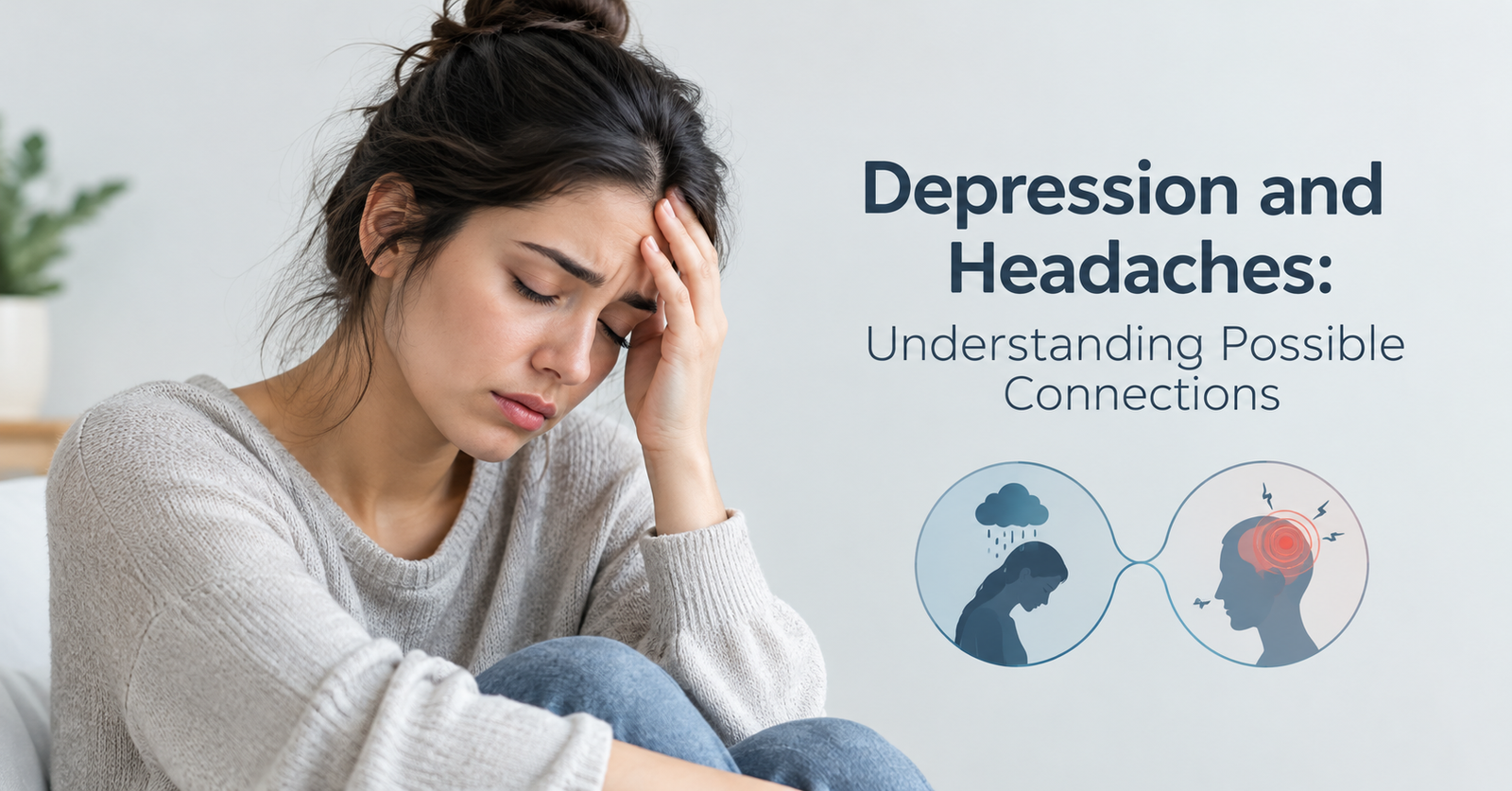
Depression and Headaches: Is There a Connection?
Depression is usually associated with emotional symptoms such as persistent sadness, hopelessness, loss of interest, or low motivation. However, depression can also affect the body. Some people experience fatigue, sleep changes, digestive problems, unexplained aches, and headaches along with changes in mood.
The relationship between depression and headaches can be complicated. Depression does not mean that every headache is caused by a mental health condition. Headaches can result from dehydration, poor sleep, muscle tension, migraine, infections, medication overuse, hormonal changes, vision problems, and many other factors.
At the same time, depression and headache disorders can occur together, and each can make the other more difficult to manage. The National Institute of Mental Health (NIMH) lists headaches and other physical aches or pains among possible symptoms of depression.
This article explains the possible connection, what depression-related headaches may feel like, how to distinguish different patterns, and when professional evaluation is important.
Can Depression Cause Headaches?
Depression can be associated with headaches, particularly when there is no obvious physical explanation for recurring head pain. However, it is more accurate to say that depression may contribute to or occur alongside headaches rather than assuming depression is always the direct cause.
Depression can influence several aspects of daily life that are also relevant to headache risk, including:
- Sleep quality
- Appetite and regular meals
- Physical activity
- Stress levels
- Muscle tension
- Emotional regulation
- Pain perception
- Daily routines
- Medication use
NIMH notes that depression can include physical symptoms such as headaches, aches, cramps, and digestive problems.
For additional background, readers can explore the National Institute of Mental Health’s depression information, which explains depression symptoms, diagnosis, and treatment.
Why Depression and Headaches May Occur Together
There is no single explanation for every person experiencing depression and headaches. Several overlapping factors may contribute.
1. Sleep Changes
Depression can significantly change sleep patterns. Some people have difficulty falling asleep or staying asleep, while others sleep much longer than usual.
Poor or irregular sleep can make headaches more likely or make existing headaches feel more difficult to manage. A person who is depressed may therefore experience a cycle in which low mood affects sleep, poor sleep contributes to headaches, and recurring headaches further reduce energy and daily functioning.
If anxiety is also present, nighttime symptoms can become more noticeable. Global Health Martz discusses this relationship in its article on anxiety and nighttime sleep problems.
2. Muscle Tension and Stress
Depression and stress can affect the way the body holds tension. Tightness in the neck, shoulders, scalp, and jaw can contribute to tension-type headaches.
According to MedlinePlus, tension headaches are commonly associated with tight or contracted muscles around the head, neck, and scalp. Stress, depression, and anxiety can be among the factors associated with this type of headache.
This can become particularly noticeable when a person spends long periods sitting, working at a computer, clenching their jaw, or remaining physically inactive.
For readers interested in the broader mind-body relationship, the Global Health Martz article on the anxiety–muscle tension–pain cycle provides additional context.
3. Changes in Appetite and Hydration
Depression can affect eating habits. Some people lose their appetite, while others eat more than usual.
Skipping meals or not drinking enough fluids may contribute to headaches independently of depression. If someone experiencing depression is eating irregularly, drinking less water, or relying heavily on caffeine, these habits can become additional headache triggers.
MedlinePlus notes that missing meals and dehydration can contribute to headaches.
Maintaining regular meals and adequate hydration can therefore be a useful part of managing recurring headaches, although persistent headaches should not automatically be attributed to lifestyle factors.
What Do Depression-Related Headaches Feel Like?
There is no single headache pattern that proves someone has depression.
A person experiencing depression may have:
- Dull or pressure-like head pain
- Recurring tension headaches
- Headaches associated with poor sleep
- Headaches accompanied by fatigue
- Headaches occurring during periods of increased stress
- Headaches alongside unexplained body aches
- Migraine attacks occurring alongside depressive symptoms
Tension-type headaches often produce a pressing or tightening sensation rather than the strong throbbing commonly associated with migraine. Pain may affect both sides of the head and may occur with neck or shoulder tightness.
However, symptoms vary considerably. A healthcare professional may need to determine whether the headache is a tension headache, migraine, medication-overuse headache, sinus-related headache, or another type.
Depression and Migraine: What Is the Relationship?
Depression and migraine can occur together more frequently than would be expected by chance alone.
Research has identified a bidirectional relationship between migraine and depression. People with migraine may have a greater risk of depression, while depression may also be associated with increased migraine risk or greater migraine burden.
This does not mean depression directly causes every migraine. Instead, the two conditions may share biological, psychological, and behavioral factors.
Migraine may involve:
- Throbbing or pulsating head pain
- Pain that is stronger on one side
- Sensitivity to light or sound
- Nausea or vomiting
- Visual symptoms in some people
- Attacks lasting hours or sometimes longer
Because migraine and depression can interact, treating only the headache may not address all the factors affecting a person’s quality of life.
How Depression Can Make Headaches Feel Worse
Depression can influence how a person experiences and responds to pain.
When headaches become frequent, they can interfere with:
- Work
- Studying
- Exercise
- Social activities
- Family responsibilities
- Sleep
- Concentration
- Motivation
At the same time, persistent pain can make depression more difficult to manage.
This creates a potentially frustrating cycle:
Low mood → reduced activity and poor sleep → increased headache vulnerability → pain and functional limitations → greater emotional distress.
The cycle is not inevitable, but recognizing it can help people and healthcare professionals look at both physical and psychological factors instead of treating either one in isolation.
Global Health Martz also explores the relationship between depression and persistent pain in its article on depression and chronic pain.
Depression Symptoms That May Accompany Headaches
Headaches may be more concerning for depression when they occur alongside a broader pattern of emotional, cognitive, behavioral, and physical symptoms.
Possible symptoms include:
- Persistent sadness or emptiness
- Loss of interest in previously enjoyable activities
- Low energy or fatigue
- Sleep problems
- Appetite or weight changes
- Difficulty concentrating
- Problems making decisions
- Feelings of guilt or worthlessness
- Irritability
- Social withdrawal
- Unexplained physical aches or pains
NIMH explains that depression can affect how people feel, think, and manage everyday activities. It also notes physical symptoms including headaches and other unexplained aches or pains.
If these symptoms persist and interfere with daily life, it is worth discussing them with a healthcare professional rather than assuming they are simply caused by stress.
How Are Depression and Headaches Evaluated?
A healthcare professional will generally consider both the headache and the person’s overall health.
They may ask about:
- When the headaches started
- How frequently they occur
- Where the pain is located
- What the pain feels like
- How long each episode lasts
- Sleep patterns
- Stress levels
- Current medications
- Caffeine intake
- Eating and hydration habits
- Other physical symptoms
- Mood and emotional changes
- Family or personal history of migraine
Keeping a headache diary can be particularly useful. Record the date and time of each headache, duration, severity, sleep, meals, fluids, caffeine, medications, stress, and other symptoms.
MedlinePlus recommends headache diaries as a way to identify patterns and potential triggers.
If depression symptoms are also present, a provider may assess mood, sleep, concentration, appetite, energy, and how symptoms are affecting everyday functioning.
Treatment for Depression-Related Headaches
Treatment depends on the underlying cause and the individual person’s symptoms.
If depression is contributing to headaches, addressing depression may be an important part of improving overall wellbeing.
Psychological Treatment
Psychotherapy can help people manage depression and develop strategies for dealing with negative thoughts, stress, behavioral changes, and difficult life circumstances.
Cognitive behavioral therapy (CBT), for example, can help people identify unhelpful thinking patterns and develop healthier behavioral responses.
NIMH describes psychotherapy as one of the standard treatment approaches for depression.
For readers interested in how thought patterns can influence emotional experiences, Global Health Martz also covers anxiety and cognitive distortions.
Medication
Depending on the diagnosis and severity of symptoms, a healthcare professional may recommend medication for depression, migraine, tension headaches, or another underlying condition.
Medication should be selected based on the individual’s medical history, other medicines, symptoms, and potential side effects. People should not start, stop, or change psychiatric or headache medication without professional guidance.
NIMH notes that depression treatment may involve psychotherapy, medication, or a combination of approaches depending on the individual’s needs.
Lifestyle and Daily Habits
Lifestyle changes can complement professional treatment.
Helpful habits may include:
- Maintaining a consistent sleep schedule
- Drinking enough fluids
- Eating regular meals
- Gradually increasing physical activity when appropriate
- Taking breaks from prolonged screen use
- Practicing relaxation techniques
- Limiting excessive caffeine
- Managing stress
- Keeping a headache diary
- Staying connected with supportive people
The NHS also recommends hydration, regular meals, rest, relaxation, and identifying headache triggers as practical steps that may help with common headaches.
When Should You See a Doctor About Headaches?
Recurring headaches should not automatically be blamed on depression.
Speak with a healthcare professional if:
- Headaches occur frequently
- Headaches are becoming more severe
- Your usual headache pattern changes
- Headaches interfere with work, school, sleep, or daily activities
- Pain continues despite appropriate self-care
- You regularly need pain medication
- Headaches occur with significant depression or anxiety symptoms
- You have other unexplained physical symptoms
A change in headache pattern deserves particular attention because headaches can have many possible causes.
When Is a Headache an Emergency?
Some headaches require urgent medical evaluation.
Seek emergency medical care for a headache that:
- Starts suddenly and is extremely severe
- Is described as the worst headache you have experienced
- Occurs after a significant head injury
- Occurs with weakness or numbness
- Occurs with difficulty speaking or understanding speech
- Occurs with significant vision changes
- Is accompanied by confusion or loss of consciousness
- Occurs with a seizure
- Occurs with a high fever and stiff neck
MedlinePlus and the NHS both identify sudden, severe headaches and headaches accompanied by neurological symptoms as reasons for urgent medical assessment.
Do not assume a severe or unusual headache is caused by depression.
What Can You Do If You Have Both Depression and Headaches?
If you experience both conditions, start by looking at the complete picture rather than focusing on only one symptom.
Consider keeping track of:
Mood: How have you been feeling emotionally?
Sleep: Are you sleeping enough or sleeping excessively?
Headaches: When do they occur, and how severe are they?
Food and fluids: Are you regularly eating and drinking enough?
Stress: Do headaches become worse during stressful periods?
Physical activity: Has your activity level changed?
Medication: Are you taking any medicines or pain relievers regularly?
This information can help your healthcare professional identify patterns and determine whether the headache is more consistent with migraine, tension-type headache, medication overuse, another medical condition, or a combination of factors.
For more general mental-health information, visit the Global Health Martz blog for additional educational resources.
Frequently Asked Questions About Depression and Headaches
Can depression cause daily headaches?
Depression can be associated with recurring headaches, but daily headaches have many possible causes. Frequent headaches should be evaluated rather than automatically attributed to depression.
Are tension headaches linked to depression?
They can be. Tension headaches involve tightness or contraction of muscles around the head, neck, or scalp, and stress, anxiety, and depression can be associated with them.
Can depression make migraines worse?
Depression and migraine can occur together, and research suggests the relationship can work in both directions. Depression may be associated with greater migraine burden and disability in some people.
How can I tell whether my headache is from depression?
You generally cannot determine the cause based on the headache alone. Look at the broader pattern, including mood, sleep, stress, appetite, medications, headache characteristics, and other physical symptoms. A healthcare professional can help determine the likely cause.
Should I treat depression or headaches first?
There is not one answer for everyone. If both conditions are present, discussing both with a healthcare professional can help create a coordinated treatment approach.
Can poor sleep from depression cause headaches?
Poor sleep can contribute to headaches, while depression commonly affects sleep. Improving sleep habits may therefore help some people, but persistent or severe headaches still require appropriate evaluation.
Final Thoughts
The connection between depression and headaches is real but complex. Depression can include physical symptoms such as headaches, and factors associated with depression—such as disrupted sleep, reduced activity, irregular meals, stress, and muscle tension—may also contribute to headache symptoms.
At the same time, headaches can have many unrelated causes. Migraine, tension-type headaches, dehydration, medication overuse, infections, hormonal changes, and other medical conditions can all produce head pain.
The most useful approach is to consider both mental and physical health. If headaches are frequent or changing, or if they occur alongside persistent low mood, loss of interest, fatigue, sleep changes, or other symptoms of depression, speaking with a qualified healthcare professional can help identify what is happening and determine an appropriate treatment plan.
For more educational information about anxiety, depression, pain, stress, and related health topics, explore the Global Health Martz health resources.