globalhealthmartz

Blogs

Anxiety and Sleep

Anxiety and Sleep: Why Your Mind Becomes More Active at Night

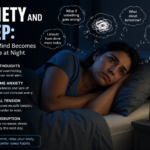
Have you ever spent an exhausting day waiting for bedtime, only to discover that your brain suddenly becomes wide awake the moment your head touches the pillow? You aren’t imagining it. For many people, nighttime creates the perfect environment for anxiety to become louder. During the day, work, conversations, errands, responsibilities, screens, and other distractions occupy attention. At night, those distractions disappear. The room becomes quiet—and thoughts that were pushed aside during the day can suddenly feel impossible to ignore. Anxiety and sleep can therefore become trapped in a frustrating cycle: Anxiety makes sleep difficult → poor sleep increases emotional
Read More »
Anxiety–Muscle Tension–Pain Cycle

The Anxiety–Muscle Tension–Pain Cycle: Understanding the Connection

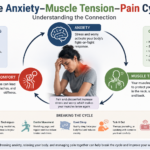
Introduction: The Hidden Loop That Controls Your Well-Being Have you ever noticed how your shoulders seem to creep up toward your ears during a stressful meeting? Or how your jaw tightens when you’re worried about something? Perhaps you’ve woken up with a tension headache after a particularly anxious week, or felt that familiar knot in your neck that just won’t go away. These aren’t random occurrences. They’re all part of a powerful, self-perpetuating cycle that affects millions of people worldwide: the anxiety–muscle tension–pain cycle. This complex interplay between your mental state, physical body, and nervous system can turn everyday stress into

Read More »
Depression and Muscle Pain

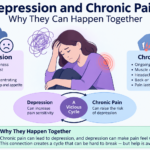
Depression and Chronic Pain: Why They Can Happen Together

Depression is often described as an emotional condition, but its effects aren’t limited to mood. For some people, depression can come with muscle aches, body pain, fatigue, headaches, sleep problems, and physical tension. At the same time, living with persistent muscle or body pain can affect mood and increase the risk of depression. This creates a complicated relationship between the mind and body. According to the National Institute of Mental Health (NIMH), depression can occur alongside chronic pain and other chronic illnesses, and each condition can make the other more difficult to manage. So, can depression cause muscle pain? It

Read More »
Depression and Muscle Pain

Depression and Muscle Pain: Why They Can Happen Together

Depression doesn’t always feel like sadness. For some people, it can show up as exhaustion, poor sleep, headaches, body aches, muscle tension, or a feeling that their entire body has become heavier. At the same time, living with persistent muscle pain can affect sleep, movement, work, relationships, and emotional well-being. This creates an important connection between depression and muscle pain. According to the National Institute of Mental Health (NIMH), depression can occur alongside chronic pain, and the two conditions can make each other more difficult to manage. Understanding this connection is important because physical pain shouldn’t automatically be dismissed as

Read More »
Anxiety and Cognitive Distortions

Anxiety and Cognitive Distortions: How Fear Changes the Way You Interpret Situations

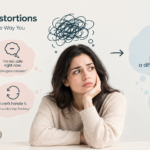
Anxiety can affect much more than your emotions. It can change how you interpret conversations, evaluate risks, remember experiences, and predict what might happen next. A friend may take longer than usual to respond to a message, and your mind immediately assumes they are angry with you. Your manager may ask to speak with you, and you begin worrying that you have made a serious mistake. You may notice a normal physical sensation and immediately imagine the worst possible explanation. The situation itself may be relatively neutral. What changes is the meaning your mind gives to it. This is where

Read More »

Anxiety and Decision Fatigue: Why Every Choice Can Feel Overwhelming

When your brain is already in overdrive, even small decisions—what to eat, what to say, what to buy—can feel like climbing a mountain. Decision fatigue is real — and anxiety amplifies it. (Photo: Pexels) You’re standing in the cereal aisle. There are 40 boxes. You’ve been there for ten minutes. Your chest tightens, your thoughts race, and suddenly you can’t remember which one you actually like. This isn’t just indecision—it’s anxiety-driven decision fatigue. And it’s exhausting. Every day, we make thousands of micro-decisions. For most people, the brain automates many of them. But when anxiety is in the driver’s seat,

Read More »