
Depression doesn’t always feel like sadness.
For some people, it can show up as exhaustion, poor sleep, headaches, body aches, muscle tension, or a feeling that their entire body has become heavier.
At the same time, living with persistent muscle pain can affect sleep, movement, work, relationships, and emotional well-being.
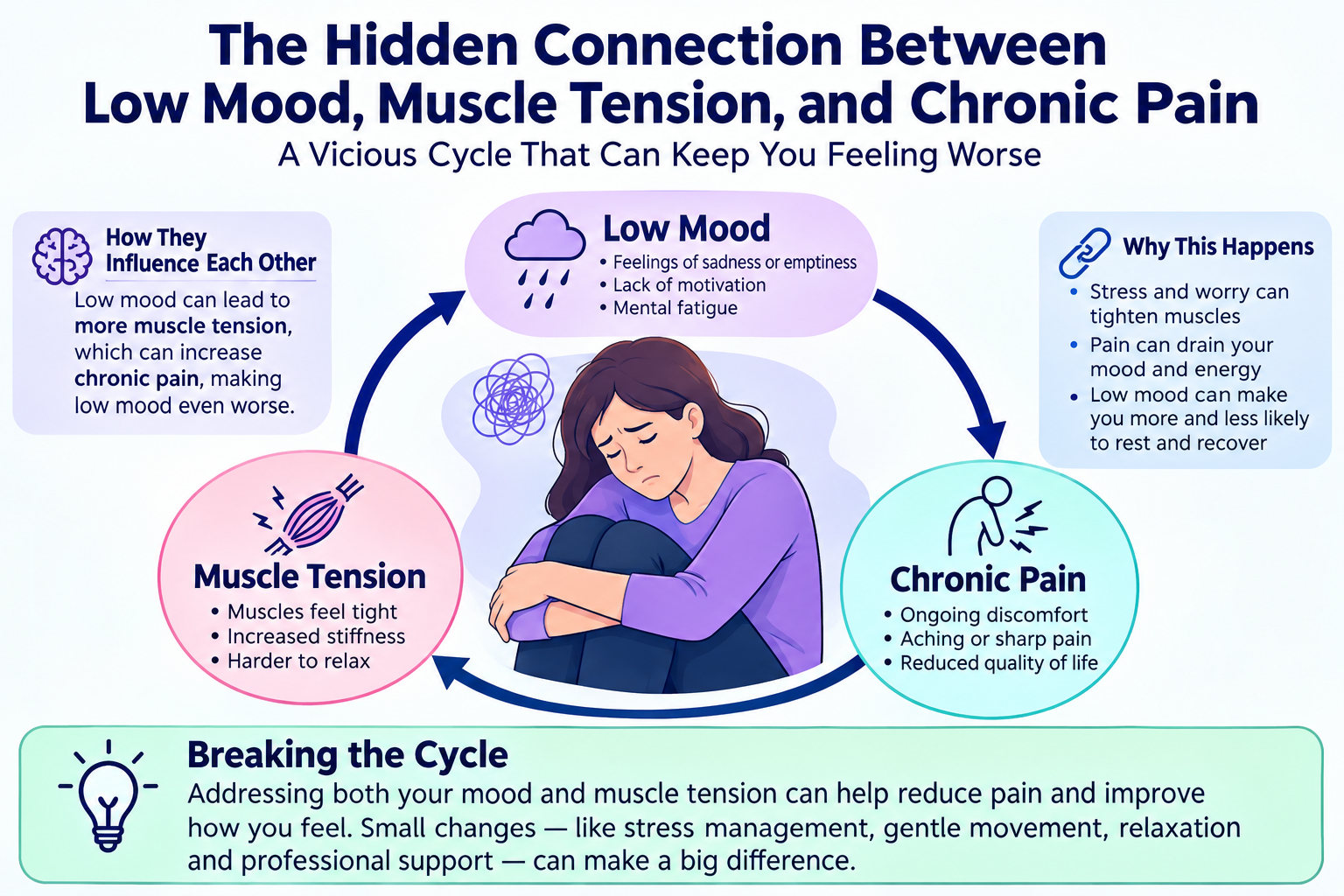
This creates an important connection between depression and muscle pain.
According to the National Institute of Mental Health (NIMH), depression can occur alongside chronic pain, and the two conditions can make each other more difficult to manage.
Understanding this connection is important because physical pain shouldn’t automatically be dismissed as “just stress,” while emotional symptoms shouldn’t be ignored simply because the person is experiencing physical discomfort.
Can Depression Cause Muscle Pain?
Depression can be associated with physical aches and pains, although it isn’t necessarily the direct cause of every muscle problem.
NIMH lists physical aches or pains, headaches, cramps, and digestive problems among possible symptoms of depression, particularly when there isn’t a clear physical explanation.
A person experiencing depression might notice:
- Aching muscles
- General body soreness
- Heavy or tired limbs
- Neck and shoulder tension
- Back discomfort
- Headaches
- Low physical energy
- Increased sensitivity to discomfort
The important point is that these symptoms can have many possible causes.
Muscle pain may also result from exercise, overuse, injury, infections, inflammatory conditions, fibromyalgia, nerve problems, medication effects, and other medical conditions. MedlinePlus explains that muscle aches have a wide range of potential causes.
So if you’re experiencing persistent muscle pain, it is better to investigate the cause rather than automatically assuming depression is responsible.
How Can Depression Affect the Body?
Depression affects more than mood.
It can influence:
- Sleep
- Appetite
- Energy
- Concentration
- Motivation
- Physical activity
- Stress responses
- Pain perception
NIMH describes depression as an illness that can affect how a person feels, thinks, and handles everyday activities, including sleeping, eating, and working.
When several of these changes happen simultaneously, physical discomfort can become more noticeable.
For example, someone who is depressed may sleep poorly, move less, sit for longer periods, and experience increased muscle tension.
That combination can contribute to feeling physically uncomfortable even when there hasn’t been a specific muscle injury.
The Connection Between Stress, Depression, and Muscle Tension
Stress and depression aren’t identical, but they can overlap.
When you’re stressed, your body can become more physically tense.
You might unconsciously:
- Raise your shoulders
- Clench your jaw
- Tighten your neck
- Hold your abdominal muscles tight
- Sit rigidly
- Grip objects more tightly
MedlinePlus explains that stress can cause muscle tension and contribute to fatigue and sleep difficulties.
If this happens repeatedly, you may begin experiencing persistent discomfort.
That’s why someone may say:
“I don’t know why my shoulders are always tense.”
They may not realize how frequently their body is responding to stress.
Can Chronic Pain Lead to Depression?
Yes, chronic pain can contribute to depression in some people.
Imagine dealing with pain every day.
You may stop exercising because movement hurts.
You might avoid social activities because you’re tired.
Eventually, the things that once made life enjoyable can become difficult.
According to NIMH, people living with chronic diseases—including chronic pain—have a higher risk of developing depression. NIMH also explains that people with depression have an increased risk of certain chronic health conditions, including pain.
This is one reason depression and chronic pain are often described as bidirectionally connected.
The Depression–Pain Cycle
The relationship can sometimes look like this:
Depression
↓
Less motivation
↓
Less physical activity
↓
Poor sleep and physical deconditioning
↓
More discomfort
↓
Greater frustration
↓
Social withdrawal
↓
Lower mood
↓
More difficulty coping with pain
This isn’t a universal pattern, but it illustrates why treating only one part of the problem may not always be enough.
MedlinePlus describes a similar mind-body relationship in chronic pain, noting that pain can affect emotions and that stress, depression, and other emotional factors can worsen the experience of pain.
Why Does Pain Sometimes Feel Worse During Depression?
Pain isn’t simply a measurement of physical tissue damage.
The nervous system processes signals from the body, and the experience of pain can be influenced by mood, attention, stress, sleep, and other factors.
NINDS explains that pain and emotional processing involve overlapping brain systems and that mood and mental health can influence the experience of pain.
This is an important distinction.
It doesn’t mean:
“The pain is imaginary.”
It means:
“The brain and body work together to create the experience of pain.”
Your pain can be completely real even when emotional or psychological factors are contributing to how strongly you experience it.
Depression, Sleep, and Muscle Pain
Sleep is one of the biggest pieces of this puzzle.
Pain can interfere with sleep.
Depression can interfere with sleep.
Poor sleep can leave you feeling exhausted and less able to cope with discomfort.
The result may be a repeating cycle:
Pain → poor sleep → fatigue → less activity → lower mood → greater difficulty managing pain
This is why improving sleep may be an important part of an overall treatment strategy.
NIMH recommends paying attention to sleep and other basic aspects of physical and mental health when dealing with depression symptoms.
Can Being Less Active Make Muscle Pain Worse?
Sometimes.
When someone is depressed or dealing with chronic pain, becoming less active is understandable.
However, prolonged inactivity can reduce physical conditioning.
Everyday movements may then feel more difficult.
The solution isn’t necessarily intense exercise.
Instead, appropriate and gradual movement may be more realistic.
Depending on the cause of your pain, this might include:
- Walking
- Gentle stretching
- Physical therapy
- Swimming
- Mobility exercises
- Light strengthening
MedlinePlus chronic pain resources note that physical therapy, low-impact exercise, stress management, and attention to mental health may all play roles in chronic-pain management.
If you have an injury or significant medical condition, ask a healthcare professional what type of activity is appropriate.
Medicines That May Be Used for Depression or Pain
Medication can sometimes be part of treatment, but the appropriate medicine depends on the diagnosis and the individual.
Importantly, not every medicine used for pain treats depression, and not every antidepressant is appropriate for pain.
Antidepressants
Some antidepressants are also used for particular chronic-pain conditions.
Examples include:
- Duloxetine
- Amitriptyline
- Nortriptyline
MedlinePlus explains that certain antidepressants can be used in the treatment of some chronic pain conditions, even when the person doesn’t have depression.
These medicines can have side effects and may interact with other medications, so they should be used under appropriate medical supervision.
Gabapentin
Gabapentin is another medication sometimes used for particular types of nerve pain.
It isn’t a general treatment for depression or ordinary muscle soreness.
Whether it is appropriate depends on the underlying type and cause of pain.
Muscle relaxants
Medicines such as cyclobenzaprine may be prescribed for certain acute muscle-spasm conditions.
Muscle relaxants can cause drowsiness and may interact with alcohol and other medicines.
They aren’t treatments for depression itself.
Stronger pain medicines
Some people with serious pain conditions may receive prescription pain medicines, including opioids.
Medicines such as hydrocodone or oxycodone have legitimate medical uses but also carry significant risks, including sedation, dependence, misuse, and potentially fatal overdose.
They should only be used exactly as prescribed and monitored by a healthcare professional.
Medication should never be used simply to mask unexplained pain without investigating the underlying cause.
Can Treating Depression Improve Physical Pain?
For some people, treating depression can make pain easier to manage.
Improvement in depression may help with:
- Sleep
- Energy
- Motivation
- Physical activity
- Stress management
- Coping ability
- Social engagement
NIMH states that depression is treatable and that treatment may involve psychotherapy, medication, or a combination of approaches depending on the individual.
However, treating depression doesn’t mean that every physical pain problem will disappear.
If there is an underlying injury, inflammatory condition, neurological disorder, or another medical cause, that condition still needs appropriate treatment.
How Therapy Can Help With Pain and Depression
Psychotherapy can be useful when depression and chronic pain occur together.
One commonly used approach is cognitive behavioral therapy (CBT).
CBT doesn’t tell you that your pain isn’t real.
Instead, it can help you identify patterns involving:
- Negative thoughts
- Fear of movement
- Avoidance
- Stress
- Sleep problems
- Social withdrawal
- Coping behaviors
MedlinePlus describes CBT as one approach that can help people living with chronic pain develop coping strategies and adapt to the effects of pain on everyday life.
For depression, psychotherapy can also help people address unhelpful thinking and behavioral patterns. NIMH provides additional information about psychotherapy and depression treatment.
Everyday Strategies That May Help
Medical treatment is important when necessary, but everyday habits can also support recovery.
1. Start with small amounts of movement
If you’re currently inactive, don’t assume you need an intense workout.
A short walk or gentle movement may be a more realistic starting point.
2. Pay attention to muscle tension
Several times a day, ask:
Are my shoulders relaxed?
Am I clenching my jaw?
Am I holding my breath?
Simply recognizing these patterns can help you notice when tension is building.
3. Establish a consistent sleep routine
Try to maintain consistent sleep and wake times.
If pain or depression is regularly preventing you from sleeping, discuss it with a healthcare professional.
4. Stay socially connected
Depression and chronic pain can both encourage isolation.
Even a short conversation with someone you trust can be better than withdrawing completely.
5. Keep a symptom diary
Record:
- Pain level
- Sleep quality
- Physical activity
- Mood
- Stress
- Medications
- Major triggers
Over time, patterns may become easier to identify.
This information can also help your healthcare professional understand what you’re experiencing.
When Muscle Pain Shouldn’t Be Blamed on Depression
This is extremely important.
Persistent muscle pain can have many causes.
According to MedlinePlus, muscle aches can result from tension, overuse, injury, infections, connective-tissue disorders, fibromyalgia, and other conditions.
You should consider medical evaluation if your pain:
- Persists for several weeks
- Is getting worse
- Appears without an obvious cause
- Interferes with normal activities
- Comes with significant weakness
- Is accompanied by numbness or tingling
- Occurs with fever or swelling
- Develops after starting a new medication
- Is accompanied by other unexplained symptoms
A healthcare professional may consider your medical history, symptoms, physical examination, and additional testing when appropriate.
When Should You Seek Help for Depression?
Occasional sadness is part of being human.
Depression is different.
NIMH explains that major depression involves symptoms such as depressed mood or loss of interest that occur most of the day, nearly every day, for at least two weeks and interfere with daily life.
Possible warning signs include:
- Persistent sadness
- Loss of interest
- Low energy
- Sleep changes
- Appetite changes
- Difficulty concentrating
- Feelings of worthlessness or hopelessness
- Social withdrawal
- Physical aches or pains
If these symptoms persist, talk with a healthcare professional.
Depression is treatable, and you don’t have to wait until symptoms become severe before seeking help.
Frequently Asked Questions
Can depression cause muscle aches?
Depression can be associated with physical aches and pains, including muscle discomfort. However, persistent muscle pain can have many other causes and shouldn’t automatically be attributed to depression.
Why does my body hurt when I’m depressed?
Depression can affect sleep, energy, activity levels, stress, and pain processing. Several of these factors may combine to make physical discomfort more noticeable.
Can chronic pain cause depression?
Yes. Persistent pain can interfere with sleep, work, movement, relationships, and enjoyable activities, increasing the risk of depression in some people.
Can stress cause muscle tension?
Yes. Stress can produce physical changes including increased muscle tension, fatigue, and sleep difficulties.
Can antidepressants help with muscle pain?
Some antidepressants are used for specific chronic-pain conditions, including certain forms of nerve or musculoskeletal pain. The appropriate medication depends on the diagnosis and should be determined by a healthcare professional.
Is muscle pain always caused by stress?
No. Muscle pain can result from injury, overuse, infection, inflammation, nerve conditions, fibromyalgia, medications, and other medical problems.
Final Thoughts
Depression and muscle pain can be closely connected, but the relationship isn’t simply one condition causing the other.
Chronic pain can affect sleep, activity, independence, and mood.
Depression can affect energy, motivation, sleep, stress, and the way pain is experienced.
Together, these factors can create a cycle that feels difficult to escape.
The good news is that you don’t necessarily have to address everything at once.
A comprehensive approach may include appropriate medical evaluation, psychotherapy, physical activity, sleep improvement, stress management, social support, and medication when clinically appropriate.
Most importantly, physical pain should be taken seriously and depression should be taken seriously.
If you’re experiencing both, treating your mental health doesn’t mean ignoring your body—and treating your physical pain doesn’t mean ignoring your mental health.
Both are part of the same person, and both deserve care.